Vertical channel
mmWave Radar
A selection and integration directory for mmWave radar hardware: bands, chips, modules, data outputs, interfaces and certification.
Every entry here is based on official documentation. Physical hardware has not been bench tested by us.
Choose a layer
📡 Radar SoCs
Radar transceiver chips and antenna-in-package front ends, documented by band, channel count and toolchain availability.
📶 mmWave Radar Modules
Board-level radar modules that expose presence, distance gates, target coordinates or raw data over a documented interface.
🧪 Radar Dev Kits
Evaluation boards and reference kits used to read radar data before a module is designed into a product.
🧍 Presence Sensors
Finished occupancy sensors for home automation, including 5.8 GHz microwave devices. Those are not mmWave radar and use a different band.
What this channel answers
- Which band a device uses and which rule part applies to it.
- Which chip or module sits inside a finished sensor.
- What data leaves the device, from a presence bit to target coordinates or a point cloud.
- Whether those outputs survive the bridge into ESPHome, Home Assistant, Zigbee2MQTT or Matter.
- What a certificate covers and what the host still has to do.
- How to bring a module up on a UART, parse its frames and validate an installation.
Module comparison
These rows come from the structured radar fields of each device profile. Values are vendor-documented and have not been bench tested.
| Module | Band | Outputs | Interface | Firmware |
|---|---|---|---|---|
| Hi-Link HLK-LD2410 Series | 24 GHz | presencedistance-gate | UARTGPIO | configurable |
| Hi-Link HLK-LD2450 | 24 GHz | multi-target-xy | UARTGPIO | configurable |
| Ai-Thinker Rd-03D | 24 GHz | multi-target-xytrajectory | UART | vendor-locked |
| DFRobot C1001 mmWave Sensor | 60 GHz | presencefallvitals | UARTGPIO | vendor-locked |
| Seeed Studio MR60FDA2 Fall Detection Kit | 60 GHz | presencefall | UARTUSB via host | vendor-locked |
| Seeed Studio MR60BHA2 Breathing and Heartbeat Kit | 60 GHz | presencevitals | UARTUSB via host | vendor-locked |
No FCC, RED or SRRC grant number is published on the official pages for these six modules.
Devices listed so far
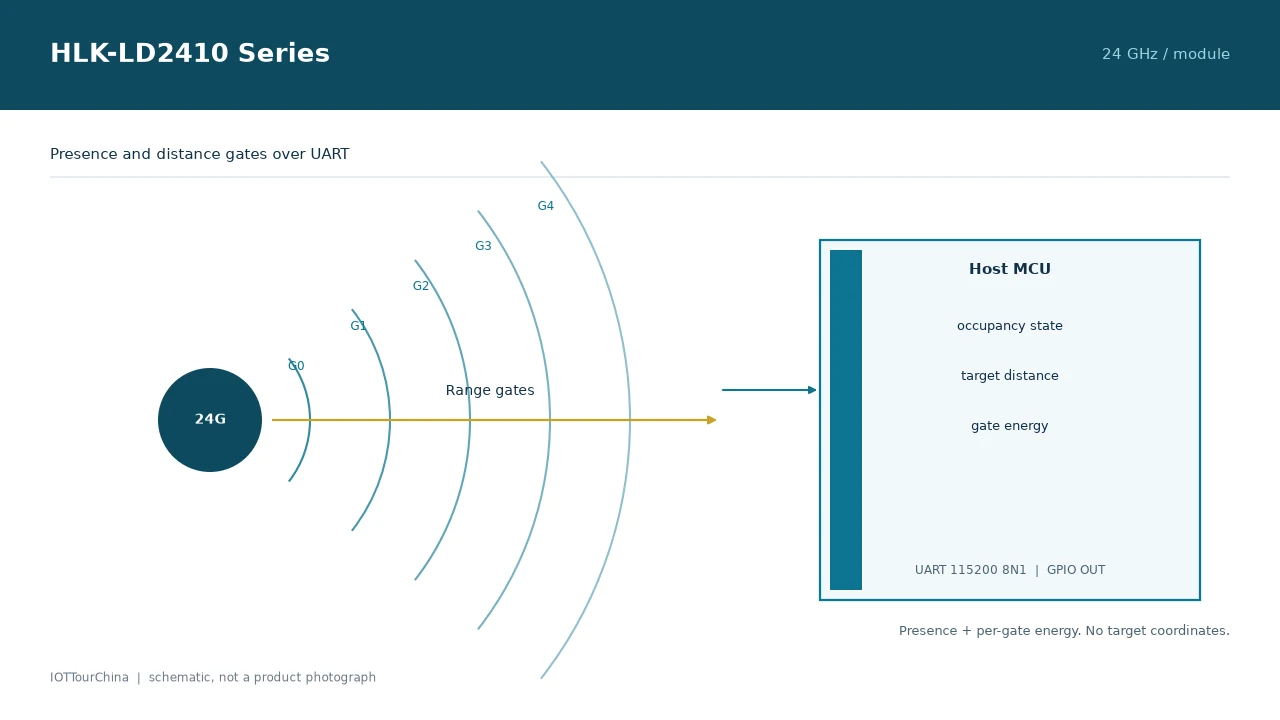
Hi-Link HLK-LD2410 Series
24 GHz presence radar reporting occupancy and per-gate energy over UART, published in two documented hardware variants.
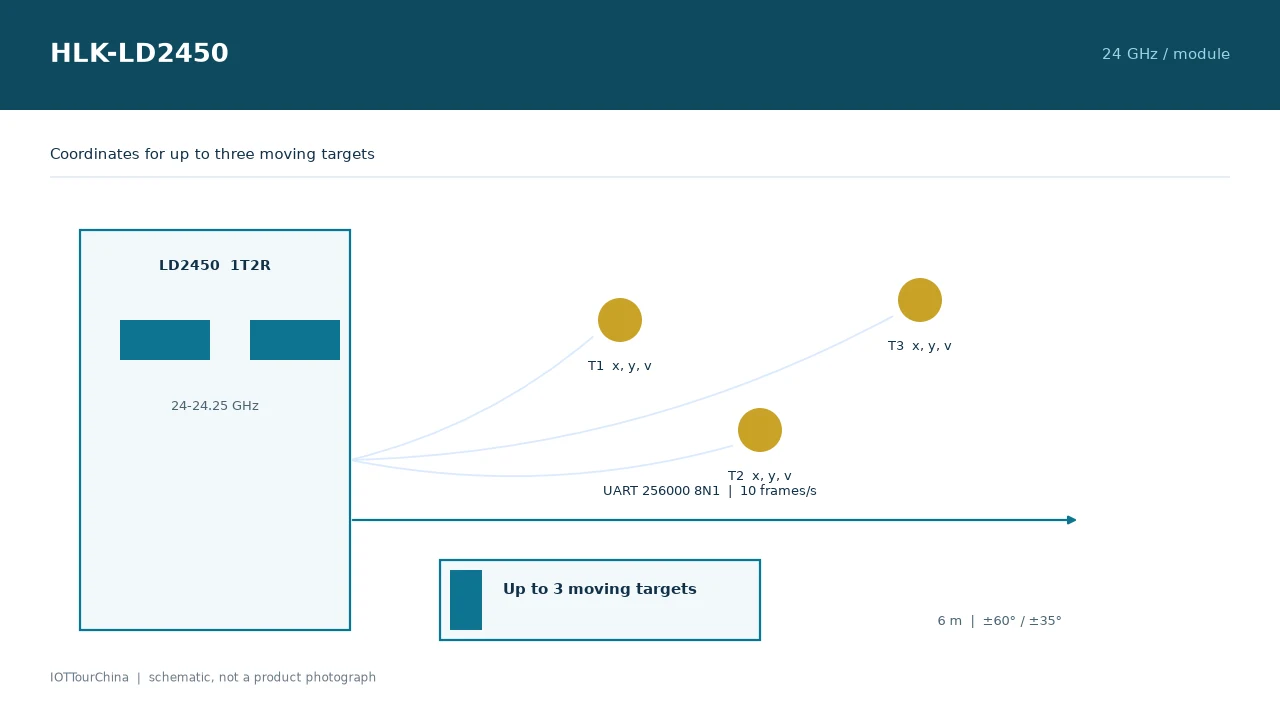
Hi-Link HLK-LD2450
24 GHz 1T2R radar reporting x/y coordinates and speed for up to three moving targets over a fast serial link.
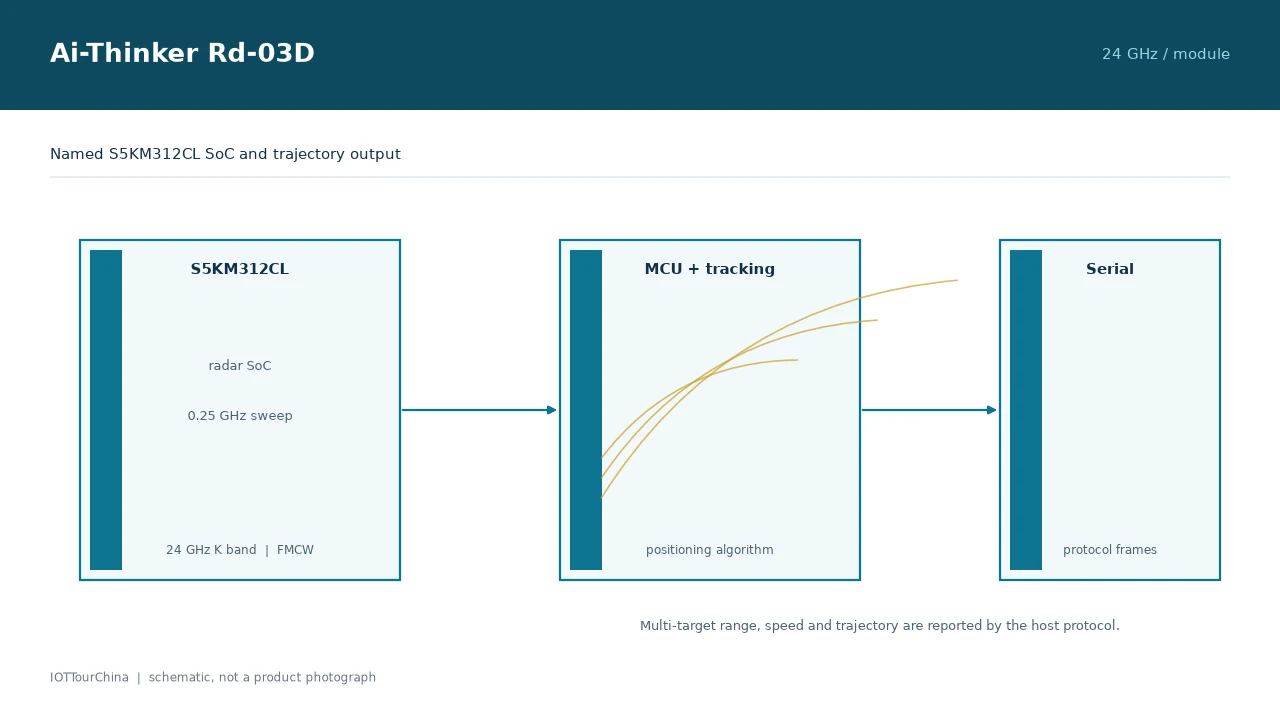
Ai-Thinker Rd-03D
24 GHz radar built on a published S5KM312CL SoC, reporting multi-target ranges and motion trajectories over a serial protocol.
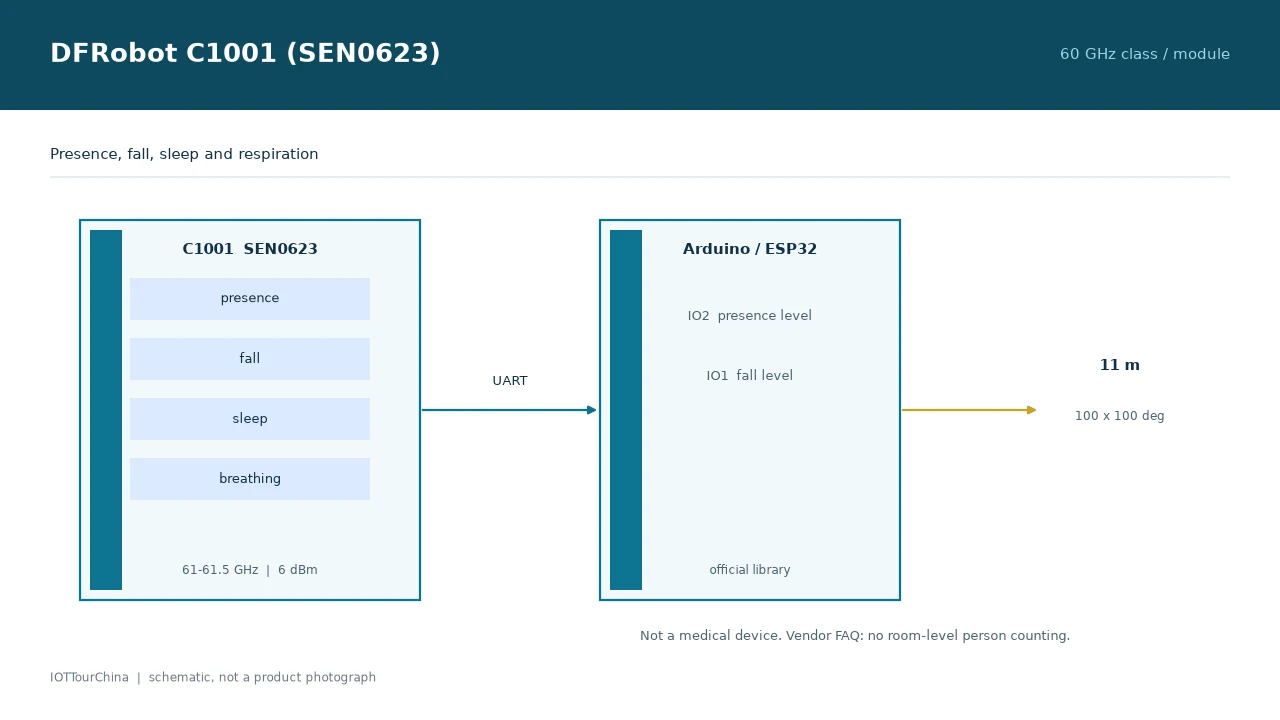
DFRobot C1001 mmWave Sensor
60 GHz class board reporting presence, fall status, sleep and respiration data over UART plus two level outputs.
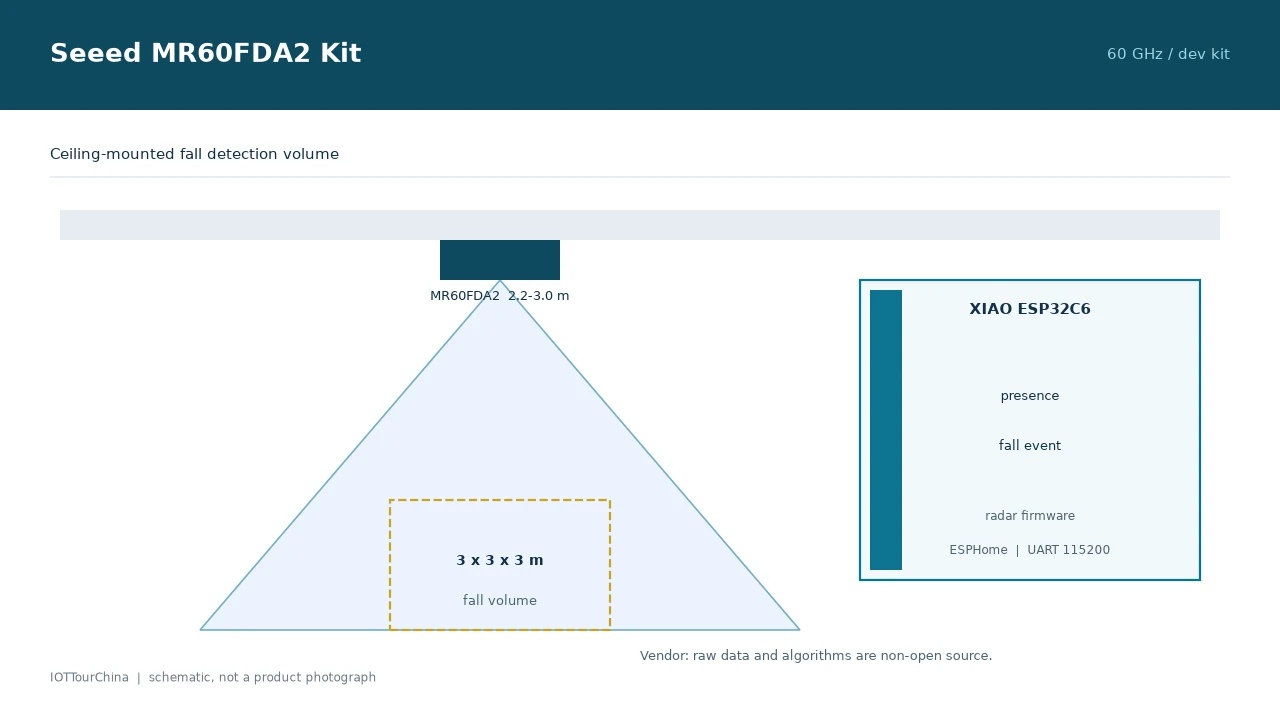
Seeed Studio MR60FDA2 Fall Detection Kit
60 GHz radar kit with a XIAO ESP32C6 host pre-flashed with ESPHome, reporting presence and fall events.
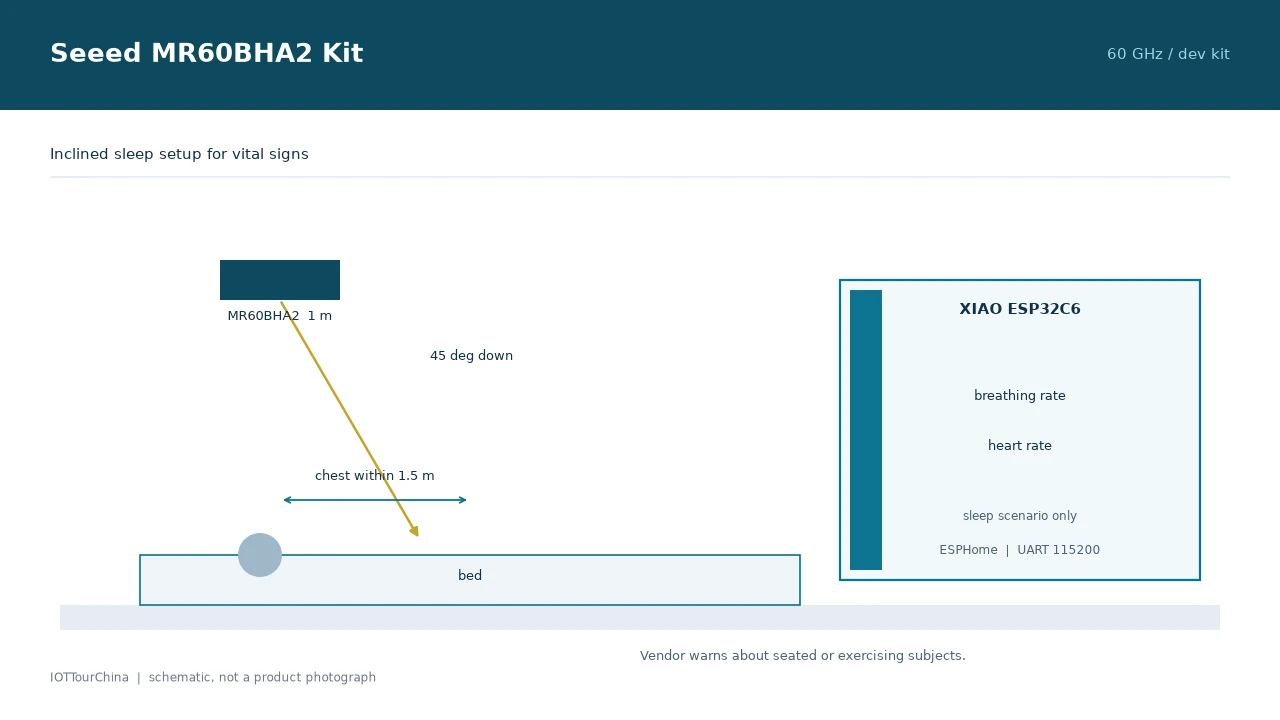
Seeed Studio MR60BHA2 Breathing and Heartbeat Kit
60 GHz radar kit with a XIAO ESP32C6 host pre-flashed with ESPHome, reporting breathing and heart rate values.
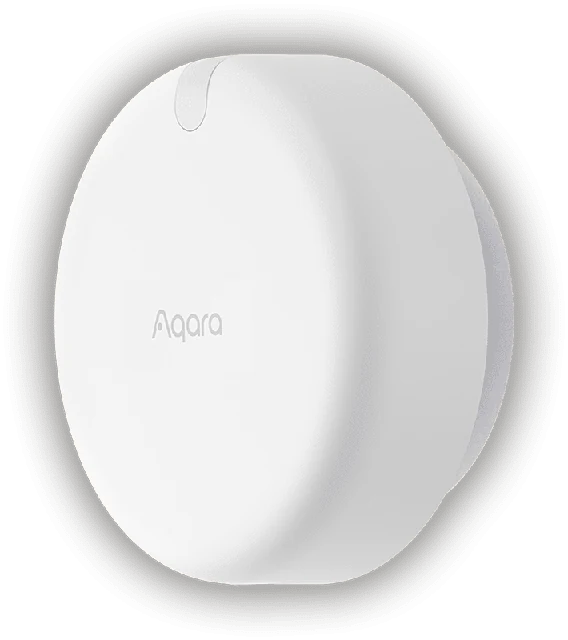
Aqara Presence Sensor FP2
Wired radar presence sensor with configurable room zones and third-party ecosystem support.
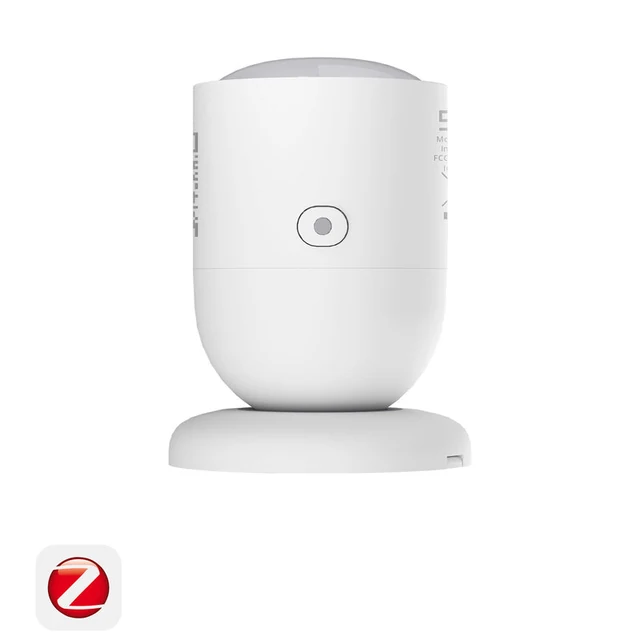
SONOFF SNZB-06P
Zigbee presence sensor using microwave radar to detect moving and stationary occupants.
Developer handbook
Four type handbooks cover presence and distance gates, multi-target tracking, fall detection and vitals. The bring-up chapters cover power and serial, frame parsing, output contracts, certification and field validation, with selection and platform notes alongside them.
Choose the hardware
24 GHz or 60 GHz radar: what the band actually changes
The carrier frequency changes bandwidth, antenna size and the rule book. It does not decide zones, multi-target tracking or fall detection.
Aqara FP2 or SONOFF SNZB-06P: choose by scenario
Choose a presence sensor by the automation you need, rather than treating all radar sensors as equivalent.
Reading a mmWave radar datasheet: what each number actually allows
A radar datasheet is a list of physical limits and vendor conventions, not a feature list.
By module type
Presence and distance-gate radar: the LD2410 type
A handbook for static-presence radar modules that report per-gate motion and stillness, based on LD2410-AA and ESPHome documentation.
Multi-target tracking radar: LD2450 and Rd-03D
A handbook for 24 GHz modules reporting up to three moving targets as relative coordinates and speed, sourced from LD2450 and Rd-03D documents.
Fall-detection radar: the MR60FDA2 type
A handbook for 60 GHz radar kits that report a fall flag, documented from the Seeed MR60FDA2 pages with the DFRobot C1001 as a cross-reference.
Breathing and heart-rate radar: the MR60BHA2 type
A handbook for 60 GHz radar kits reporting breath and heart rate, documented from the Seeed MR60BHA2 pages with the DFRobot C1001 as a cross-reference.
Power, UART and serial frames
Power and UART bring-up for mmWave radar modules
Phantom targets usually start at the power rail or the UART, not in the firmware. Check the supply budget, logic level and baud rate first.
Serial frames and configuration commands on radar modules
Vendors publish protocol documents, PC tools and firmware images, not one universal frame layout. Pin the parser to your board revision.
Test a radar UART parser without the radar
Most radar integration bugs are parser bugs, and a parser bug rarely looks like one.
Data contracts and platform integration
Where the radar FFT runs: edge, host, or both
Range, Doppler and angle can be computed on the radar SoC or on a host. The split decides what the link carries and what the host must do.
Radar output types and the data contract with your host
Write down the output the automation needs before choosing a module. Presence, gate energy, coordinates and algorithm results are different contracts.
From radar UART frames to Home Assistant entities
A radar module speaks frames over UART; Home Assistant speaks entities. ESPHome is the layer between, and the configuration depends on the module family.
From radar presence to a room occupancy state machine
A radar reports presence. An automation needs occupancy, and the two are not the same word.
What Zigbee2MQTT really exposes for radar sensors
Zigbee2MQTT publishes a fixed set of attributes, and for a radar occupancy sensor that set is far smaller than the radar data itself.
Connect SNZB-06P presence events over MQTT
Watch occupancy changes through Zigbee2MQTT with explicit freshness and connection status.
By integration platform
Matter occupancy vs vendor zones: what survives the bridge
A Matter endpoint carries occupancy state, not zone geometry. Here is what a radar bridge exposes and what stays inside the vendor app.
Radar point data into ROS: from TI frames to PointCloud2
TI reference designs keep detection on the sensor and stream points to a host. Here is what the driver publishes and what a PointCloud2 consumer expects.
PIR plus radar triggering: wake fast, clear slowly
PIR reacts to a sudden infrared change; radar sees small movement and still presence. Combine them with asymmetric filters instead of fighting one sensor.
Tuning, validation and certification
Tuning distance gates to remove radar false triggers
Most radar false triggers are real reflections from a fan, a curtain or a neighbouring room arriving in a gate left at its default threshold.
Radar boundary bleed: capping range at the room edge
Radar range does not stop at a partition wall. Map the boundary first, then choose a gate cap, a rectangular zone or a detection area.
LD2450 zones in ESPHome: what the three rectangles actually count
The LD2450 exposes three rectangular zones with target counts, not a zone-filtered presence flag. Here is how to wire them without misreading the entities.
Two radars in one home: coexistence without invented spacing numbers
Vendors list nearby radars as an interference source but publish no minimum spacing. Here is a test-led way to plan a second sensor.
A repeatable validation checklist for radar installations
Record the room, the firmware and the mounting geometry with every reading. Without those three, a tuning result cannot be reproduced after a re-mount.
From a radar module to a certified product
A module grant does not certify the finished host. Check the rule part, the grant conditions and the host obligations before freezing the enclosure.
Related reporting
- A Radar at 111 RMB: Who Is Still Winning Orders in Chinese mmWave
- Chengtech's CTO argues the radar pipeline itself is the problem: model-defined radar, three developer tiers, and raw signal access as the top rung
- ICLEGEND's DEV202S hands out raw frames — 8 range bins, 64 chirps, two channels — and a Python script does the rest
- Is radar algorithm work dead? A five-year view of what AI actually cheapens
- One low-power anchor and two radars give a drone centimeter-level 6DoF in the dark
- A 60 GHz radar reads wrist pulse at 10 cm, and the hard part turns out to be presence gating
- Desay SV's 8T8R 4D radar moves signal processing out of the sensor, and that changes who owns the algorithm
- An ESP32-S3 and a 60 GHz radar build a self-hosted sleep monitor with device shadow
- RISE: one static mmWave radar rebuilds a room from its multipath ghosts
- Every DOA algorithm is answering the same inverse problem under different assumptions
- A 60 GHz 1T2R AiP module measures breathing and heart rate at 30 cm, on a dual-channel phase chain
- Shelly Presence Gen4 and Aqara FP400: two routes to zone-based presence sensing
- Laifen put a 24 GHz radar in a RMB 499 makeup mirror — and the module vendors are still waiting for the beauty brands
- Twelve radar channels, one breathing rate: the paper that stops adding waveforms together
- mmWave radar and a camera divide the labor in a smart-door access framework
- UTM: an uncertainty-guided thermal and mmWave detector, from a 2023 arXiv paper
- Antennas set the ceiling for 4D radar; where the model runs sets the score
- An STM32 build for aging in place: 60 GHz mmWave vital-sign radar, fall detection and OneNet cloud monitoring
- A wall switch that sees: Inovelli's VTM32-SN brings mmWave to Matter
- Seeed's MR60BHA2 sells breathing detection for USD 25 — the algorithm inside is the part you cannot open
- A stepper motor aims an mmWave FMCW radar to keep walking heart rates in view
Scope
We cover component and integration questions for home automation, building sensing and robotics perception. We do not cover automotive front-fit radar, medical diagnosis claims, or certification services.
Prices and market share figures are not published here unless they come from an official price list or a primary filing.