CF-Drone: a palm-sized open-source ESP32-S3 quadcopter flown from a phone browser
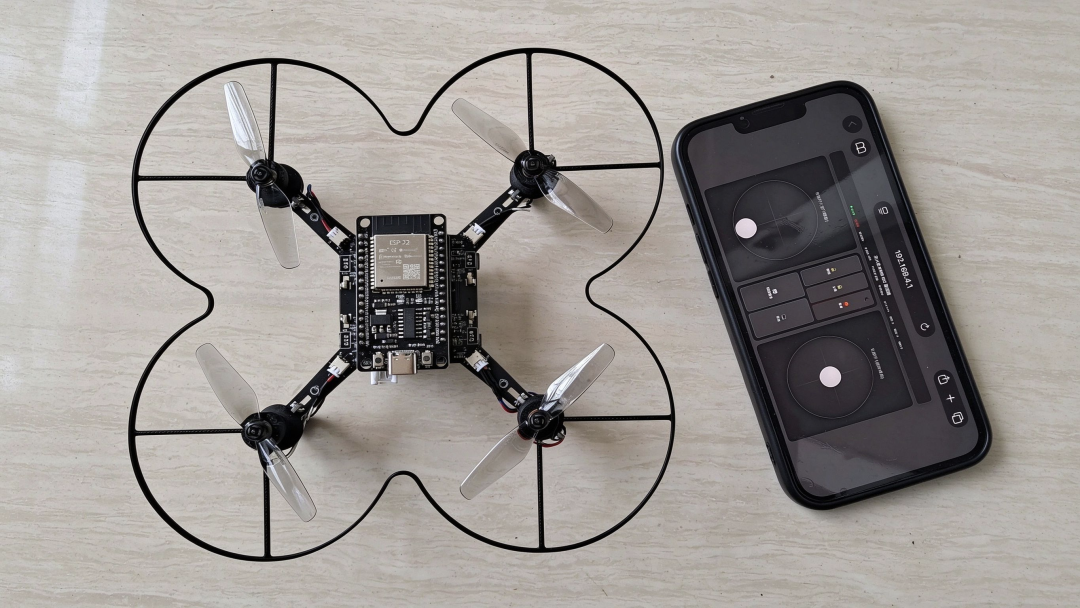
CF-Drone is a palm-sized, fully open-source quadcopter built around Espressif's ESP32-S3. With a 118 mm wheelbase and an all-up weight of about 80 grams, it is small enough to rest in the palm of your hand and to fly both indoors and out. The flight controller runs on Arduino, the firmware is released in full, and the whole thing can be built from a component kit — making it a practical project for electronics hobbyists, IoT students and classroom use.
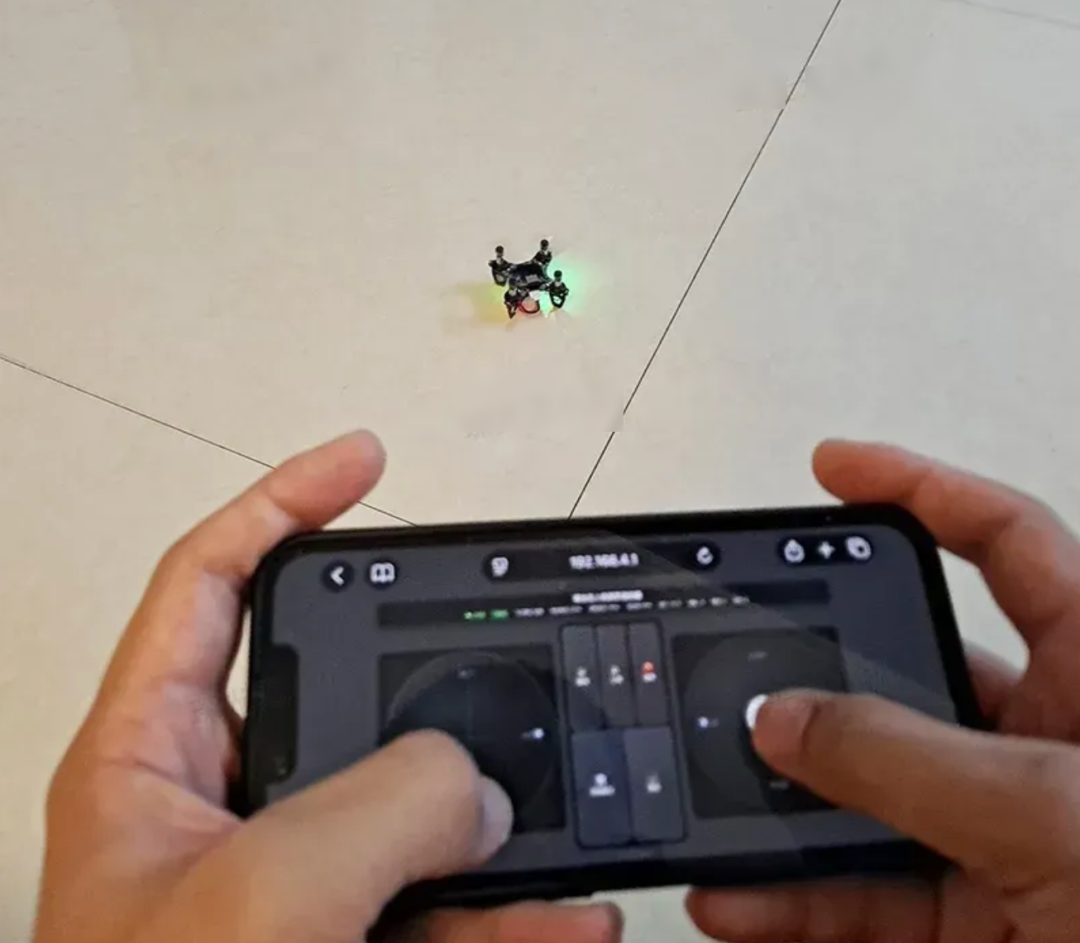
The appeal is the low barrier to entry: no separate radio transmitter is required. The drone brings up its own WiFi hotspot, and a phone browser opens the control surface directly — connect, then fly. A typical build works out to roughly 69 yuan in parts.
What it is
- Palm-sized airframe — a compact design that fits in one hand and flies indoors or outdoors, so you can start flying just about anywhere.
- ESP32-S3 control — the widely used ESP32-S3-SuperMini handles flight, with rich programming material and a gentle learning curve thanks to Arduino-based development.
- WiFi phone control — no extra transmitter: the phone browser talks to the drone over its onboard WiFi hotspot.
- Fully open hardware and software — schematics and PCB are published on OSHWHub, and the CF-Drone flight firmware is open on GitHub, with nothing held back.
- Rich learning material — documentation walks from circuit theory to firmware programming, making it a strong practical project for embedded and hardware design.
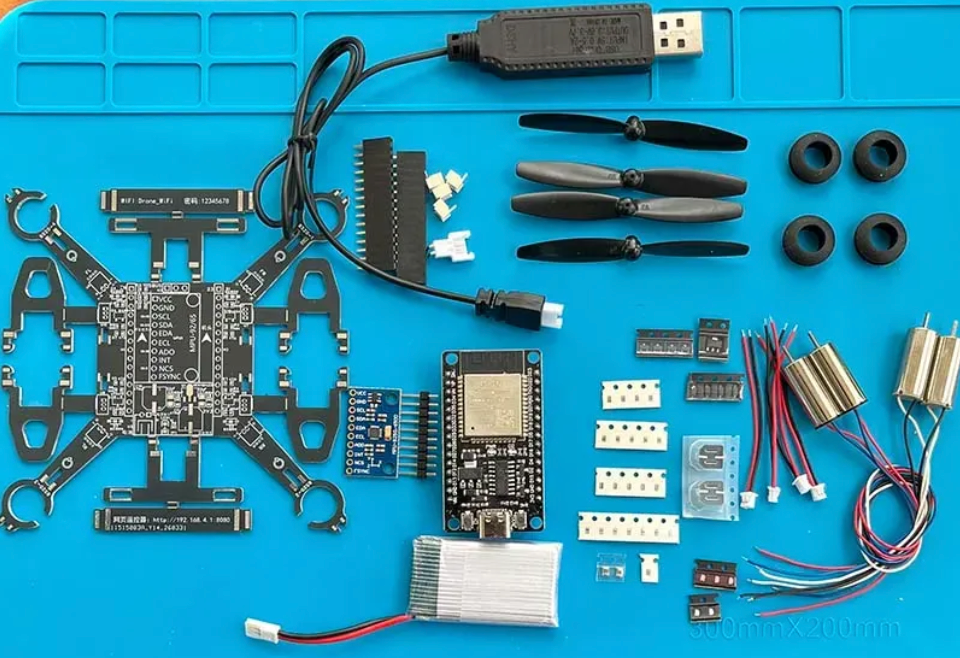
- Easy assembly — buy a parts kit, solder it up yourself, and understand how a drone actually works along the way.
Bill of materials
| Item | Part | Role |
|---|---|---|
| Main controller | Espressif ESP32-S3-SuperMini | Dual-core 240 MHz, onboard WiFi and Bluetooth |
| Attitude sensor | MPU-6500 | Six-axis gyroscope and accelerometer, read over SPI |
| Motor driver | AO3416 MOSFET (×4) | Gates each of the four motors under PWM |
| Regulator | ME6118A33PG LDO | Regulates battery voltage down to 3.3 V for the MCU and sensors |
| Header pins | HX PZ2.54-1x3P | Expansion and receiver connections |
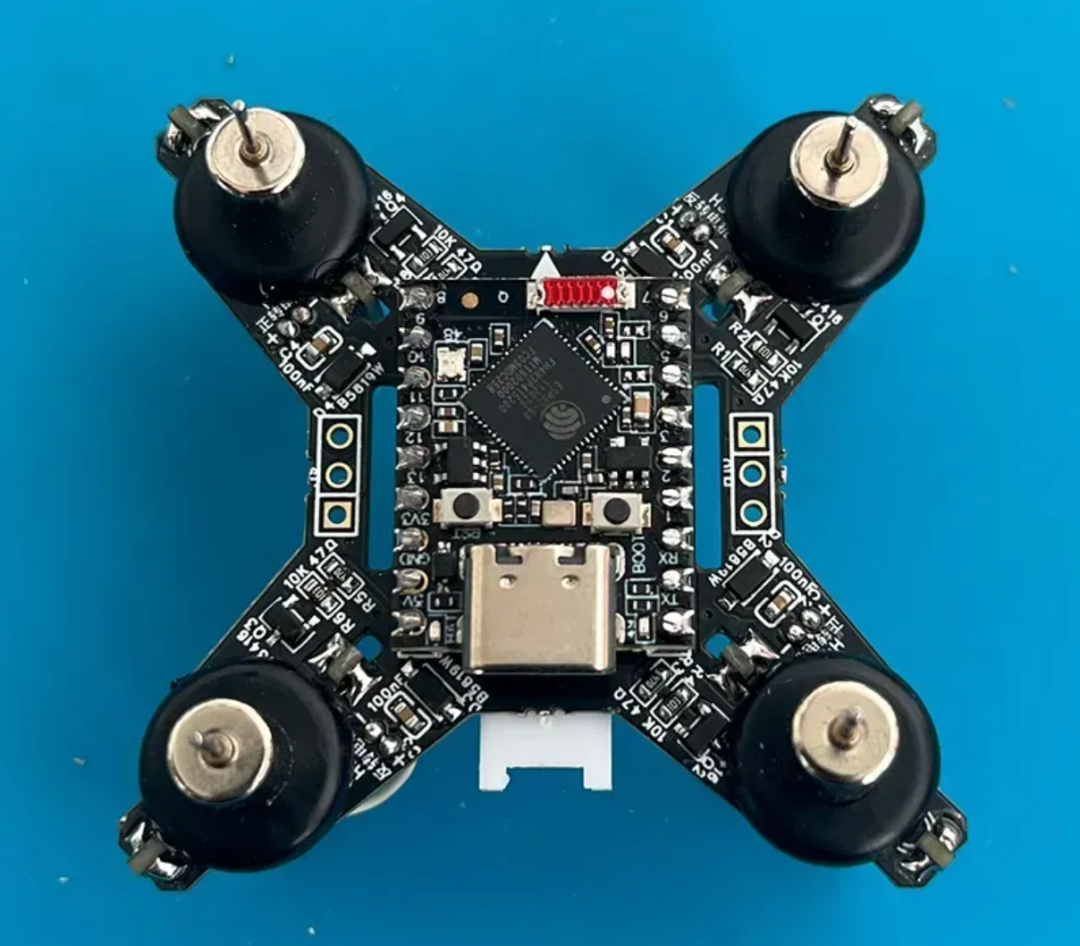
| Airframe | Four-axis, X layout | Propellers arranged in an X pattern |
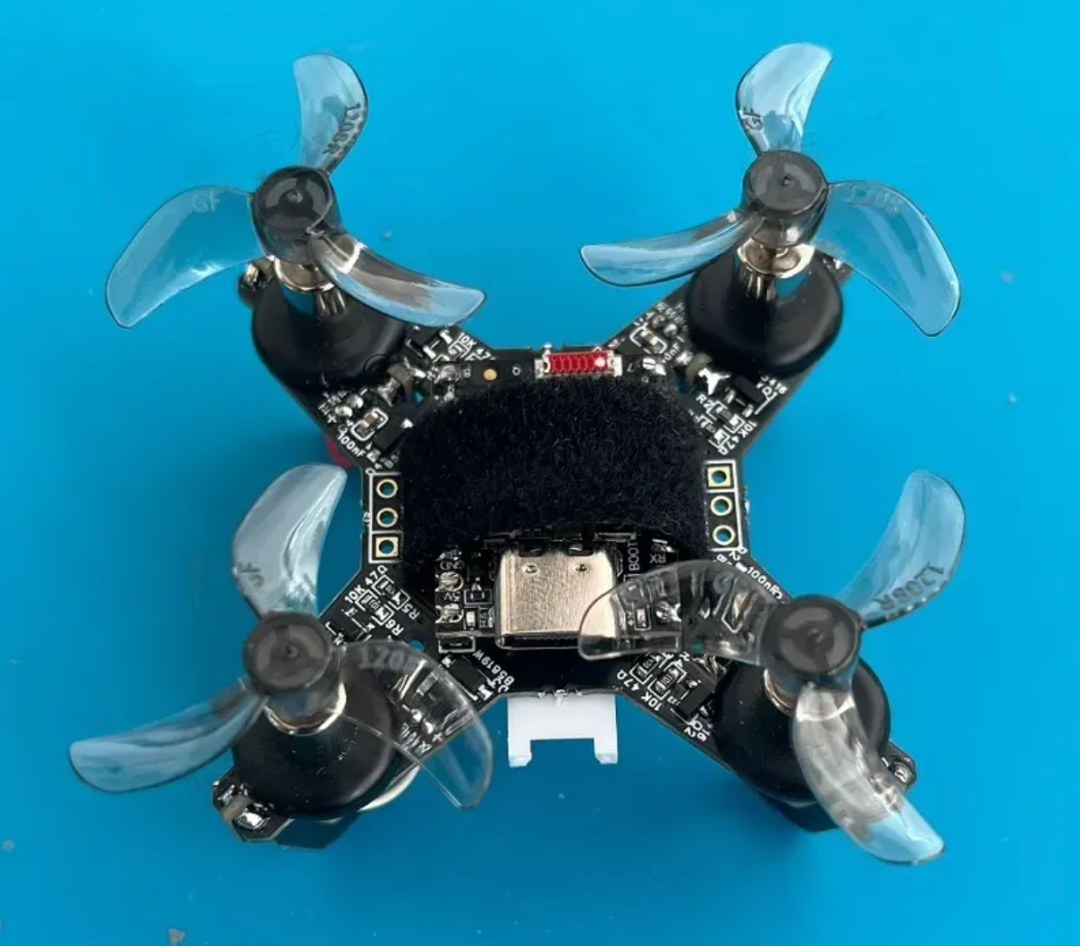
The airframe is a four-rotor design with the propellers in an X layout, controlled over WiFi from a phone Web page, and it also supports ELRS / CRSF / SBUS receivers.
How the flight loop works
The flight controller reads body attitude from the MPU-6500, then drives four motors through PWM to keep the quadcopter balanced and follow commands.
- The MPU-6500 measures rotation and tilt with its gyroscope and accelerometer, communicating with the controller over SPI.
- Each of the four motors is switched by its own MOSFET, and the controller outputs PWM to set motor power and speed.
- The LDO regulates battery voltage to a stable 3.3 V for the controller and sensors.
- A receiver interface is reserved, so an ELRS, CRSF or SBUS receiver can be added.
The mainboard reserves four data ports — I2C, SPI, a receiver port and a spare port — for connecting sensors and receivers, or for powering external devices:
mainboard ports
  I2C        sensors (barometer, magnetometer, rangefinder, optical flow)
  SPI        high-speed peripherals
  RECEIVER   ELRS / CRSF / SBUS
  SPARE      auxiliary / power output
A sensor expansion board plugs straight into these reserved ports and carries a barometer, magnetometer, laser rangefinder and optical-flow sensor. The firmware auto-detects which sensors are present and enables altitude-hold and position-hold flight modes accordingly — so the same airframe scales from a bare trainer to a stabilized platform.
Assembly
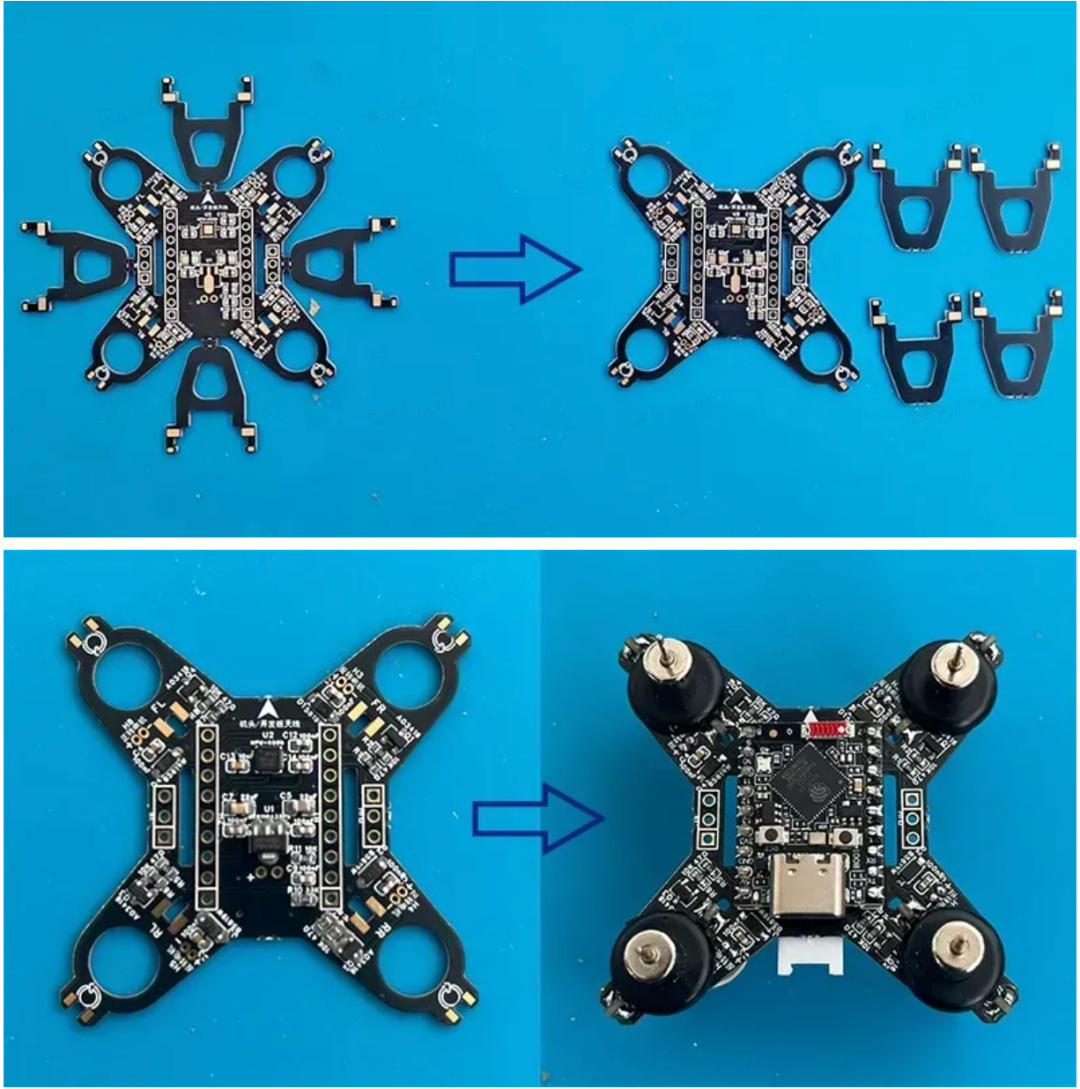
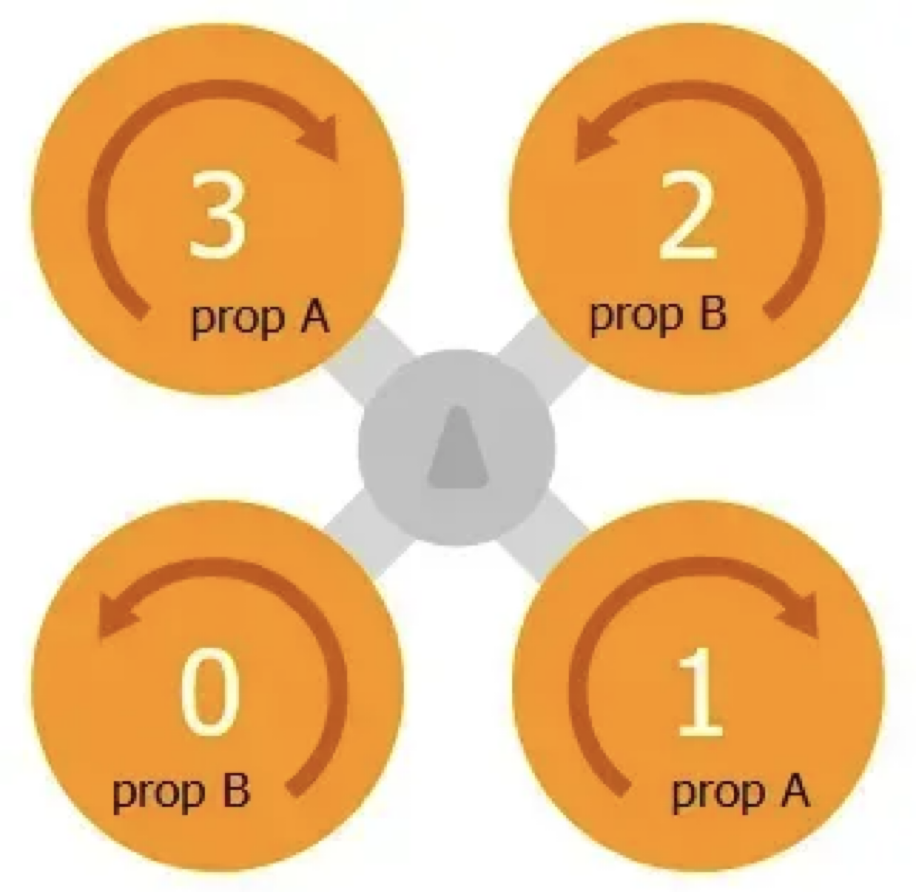
The airframe is laid out with a motor mount at each of the front, back, left and right positions, and the main controller in the centre. Soldering the motor mounts as the structural support also helps protect the drone if control is lost. Motors are fixed to the brackets with rubber rings or hot glue — and the rotation direction must follow the specified pattern:
| Motor position | Direction | Propeller |
|---|---|---|
| Front-left (0) | Counter-clockwise | prop B |
| Front-right (1) | Clockwise | prop A |
| Rear-right (2) | Counter-clockwise | prop B |
| Rear-left (3) | Clockwise | prop A |
Open hardware and firmware
The hardware is released in full — schematic, PCB design files, Gerber files and BOM — and the flight firmware source is 100% open as the CF-Drone project on GitHub. Once powered up, the drone hosts a WiFi access point and the browser remote lives at a fixed local address, so the phone needs nothing installed.
IOTTourChina covers open-source IoT hardware built on widely available Chinese silicon as part of its device and developer resource. Details should be confirmed against the project's official documentation.