DayoTag: a 27 g AI memory pendant with open hardware, closed software
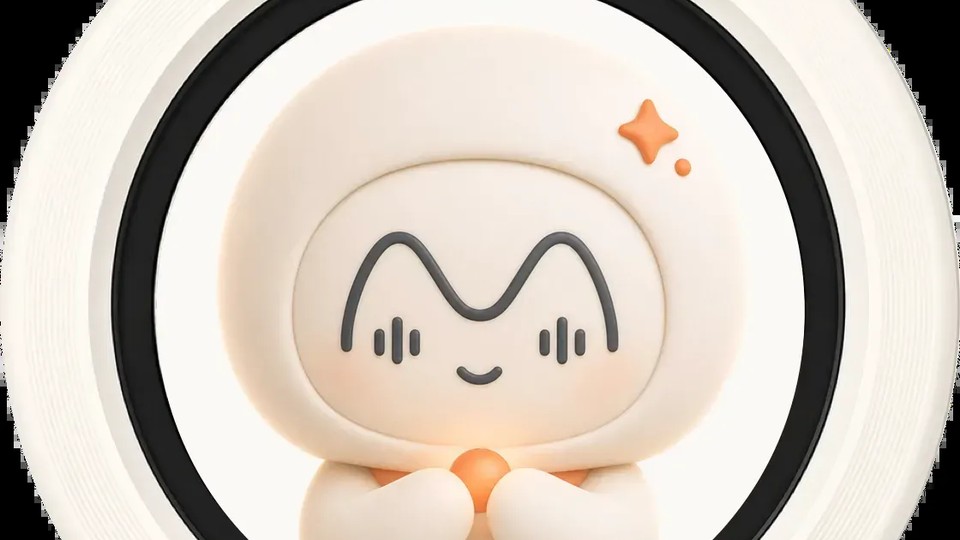
A wearable that records your whole day is now a weekend project. Making one that a stranger can build, flash and trust is a different problem, and it is the second problem that makes DayoTag worth reading about. The pendant itself is unremarkable; where the project draws the line between what it publishes and what it keeps is not.
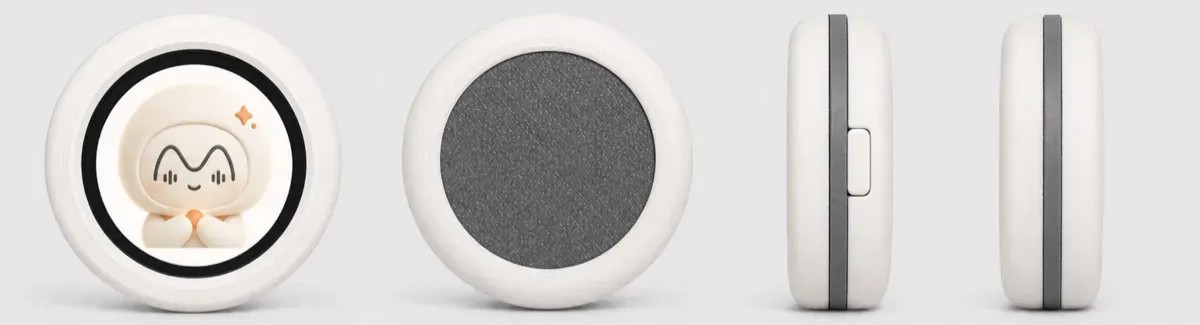
DayoTag is a 43 mm round pendant that weighs 27 g, built around a single round board instead of the usual sandwich of a development board, a carrier and plug-in modules. It listens continuously, writes audio to local storage whether or not a phone is nearby, and pushes only the new audio to a phone over Bluetooth Low Energy, where an app transcribes it and a memory agent turns it into cards you can browse, search and question.
What it is
| Parameter | Published value |
|---|---|
| Enclosure | 43 mm diameter, 27 g |
| Microcontroller | SiFli SF32LB525UC6 |
| Display | 1.2 inch, 240 x 240, JDI reflective, no backlight |
| Local storage | 1 Gb, about 128 MB, SD NAND |
| Wireless | Bluetooth 5.3, dual mode |
| Sensors | One MEMS microphone, one six-axis IMU |
| Battery | 502525 pouch cell |
| Phone app | Android 7.0 or later |
The case is designed to be worn four ways, and the same hardware is meant to survive all of them:
- As a pendant. A lanyard through the ringed shell, worn at the neck.
- On a keyring or a bag. The ringed shell also takes a clip.
- Magnetically, on clothing. The ringless shell is the simpler outline for a magnetic mount on a jacket, a cap or a bag strap.
- On a desk or the back of a phone. The same magnetic mount, used as a stand.
That fourth position matters more than it sounds, because the screen is the one part of the product that is about expression rather than recording. Wallpapers, a daily persona, a lucky colour and generated artwork are all synced from the app back to the round panel, and the vendor treats that as a feature in its own right rather than a status readout.
Where the open-source line actually falls
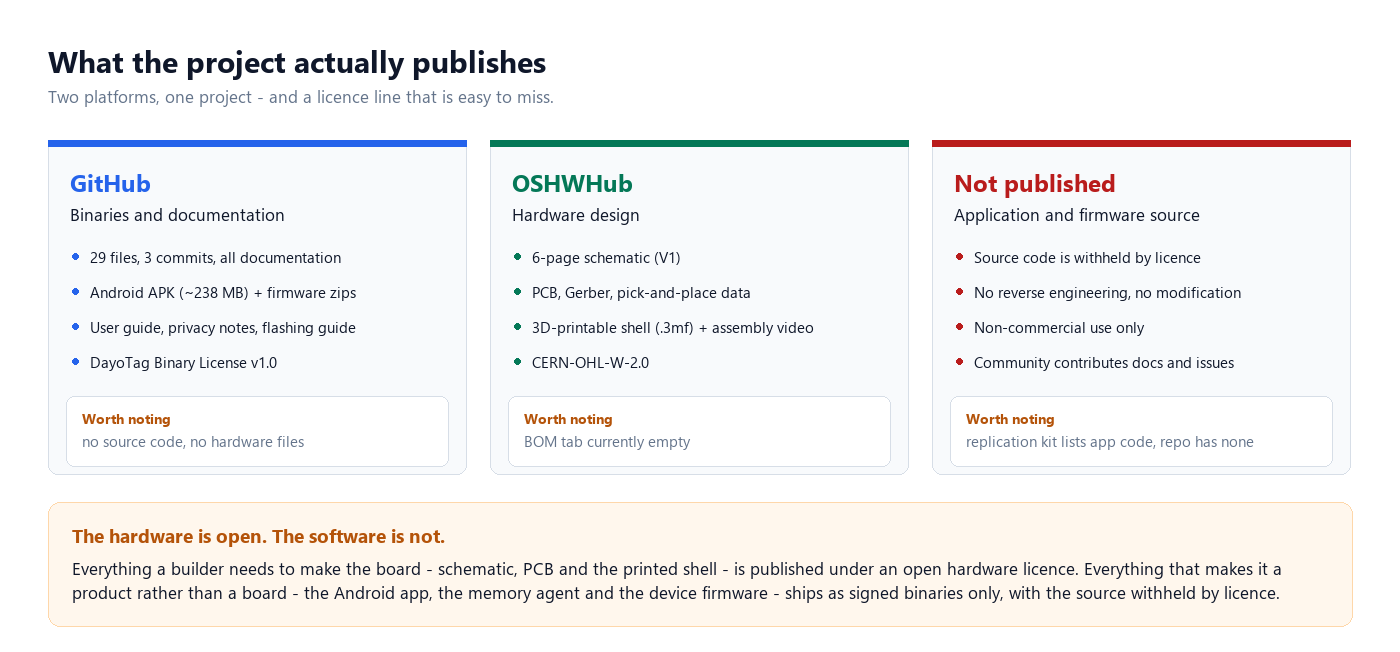
DayoTag is usually described as an open-source AI wearable. That is true of exactly one half of it, and the half that is open is not the half most descriptions are about.
The GitHub repository is a distribution channel, not a source tree. As of the middle of October 2026 it holds 29 files across three commits, and every one of them is documentation, a licence file or a product image. There is no application source, no firmware source and no hardware design in it. What it does carry is the thing that actually has to be signed: the Android APK, serial flashing images for the device firmware, SHA-256 checksums, third-party notices and the user-facing guides.
The software licence is explicit about this. DayoTag ships under a custom binary licence that grants personal installation and use, permits redistributing an unmodified official binary if the checksums still match and the licence travels with it, and prohibits resale, modification, derivative works, bypassing the signing or update mechanisms, and reverse engineering. The same document states that the DayoTag software source is not publicly released, and that the app and firmware may not be used commercially. Community contribution is scoped to documentation, bug reports and feature discussion.
The hardware is the opposite case. The schematic, PCB, Gerber and pick-and-place data, the shell model and an assembly video live on the OSHWHub open-hardware platform, published under CERN-OHL-W-2.0. The project page lists six schematic pages for the first hardware revision, gives the replication cost as about 100 yuan, and has been viewed around 77,000 times since it was created on 28 July 2026. Two details on that page are worth knowing before planning a build: the bill-of-materials tab is currently empty, so the cost figure cannot be checked line by line, and the back-side USB-C connector has to be soldered by hand because this revision does not support double-sided assembly.
The result is an unusual split, and one that is easy to misread from a summary. You can legally fabricate the board, print the shell and study every net in the design. You cannot legally take the app apart, and the firmware you flash is a black box that arrived over the air.
The board, part by part
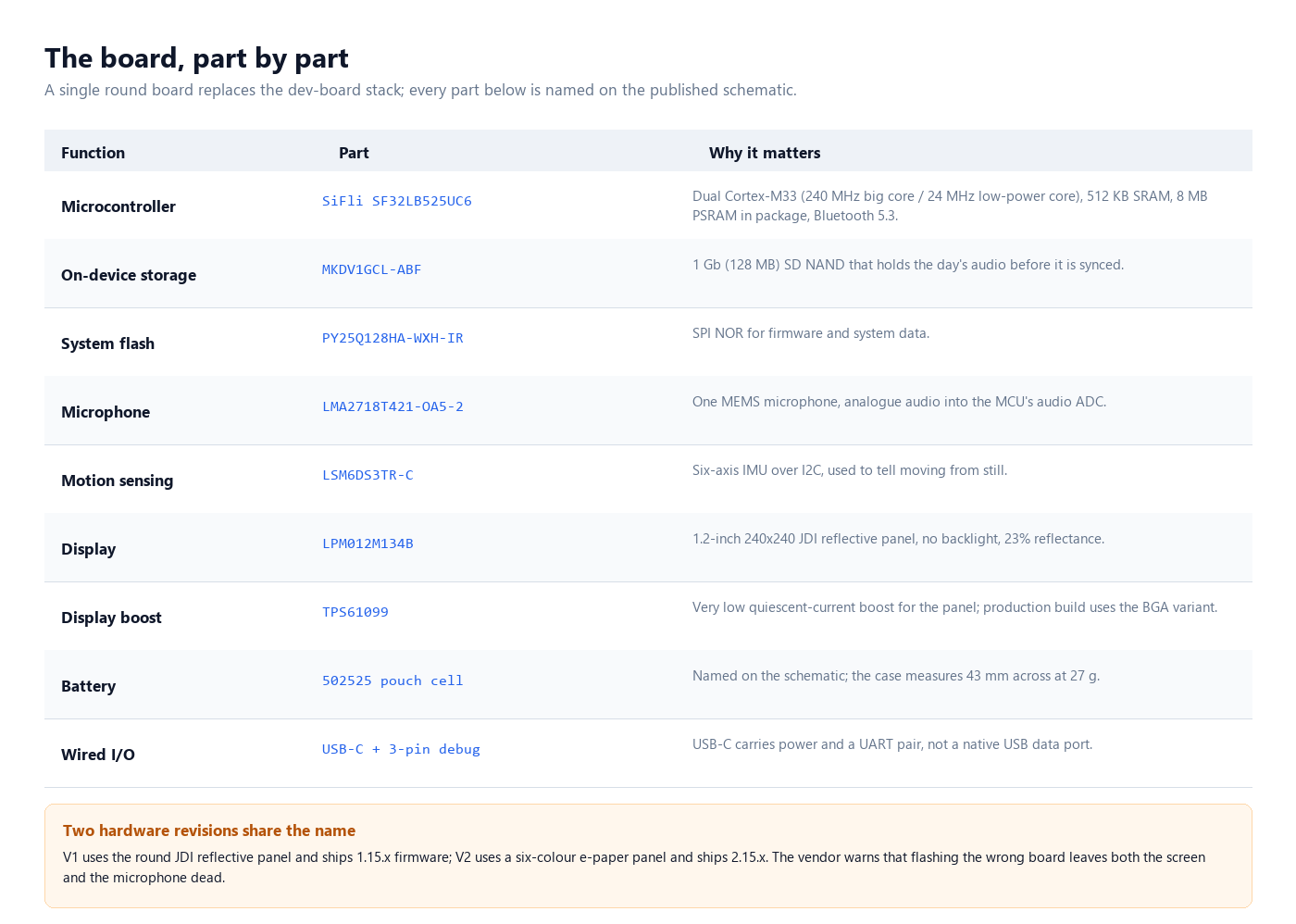
The main processor is a SiFli SF32LB525UC6, a Chinese AIoT part aimed squarely at this kind of product. It is a big-core and little-core arrangement of Arm Cortex-M33 processors, with the performance core running up to 240 MHz and a low-power core at up to 24 MHz, 512 KB of SRAM, a 2D and 2.5D graphics engine that tops out at 512 x 512, and a 24-bit audio codec with a dedicated analogue microphone input. The variant used here is the lithium-battery version, which accepts 3.2 to 4.7 V and manages charging, and it comes with 8 MB of PSRAM stacked inside the package. Dual-mode Bluetooth 5.3 is on the same die, which is why there is no separate radio module on the board.
Everything else on the board is chosen for the two constraints the product actually has: keep the audio and keep the power down.
- Storage is split in two. A 1 Gb SD NAND device takes the captured audio, and a separate SPI NOR flash holds firmware and system data. The schematic exposes the boot strap pins that select which of those storage types the processor starts from, so the design can be reflowed with a different memory population without changing the processor.
- The audio chain is deliberately narrow. One MEMS microphone feeds the MCU's audio ADC through an analogue path, which is cheaper and simpler than a digital microphone array, at the cost of not being able to do beamforming.
- The display is the low-power part. A 1.2-inch JDI reflective panel has no backlight at all, relying on ambient light with a reflectance of about 23 percent. That is what makes an always-visible round screen plausible in a 27 g pendant, and it is also why the colour depth is limited to 2 bits. It is readable in sunlight precisely because it is not lit.
- The panel's boost converter is specified to the component. The design names a very low quiescent-current boost converter and notes that the 2.2 microhenry inductor next to it must be a wire-wound part, not a multilayer one. That is the kind of detail that only survives contact with a real prototype.
- There is no on-board USB-to-serial chip. USB-C on this board carries power and a UART pair, and nothing else. Flashing over the wire needs an external 3.3 V USB-to-UART adapter, and the vendor explicitly warns that a normal USB-C cable connected to a computer will not produce a usable port.
Six pages of schematic, one round PCB
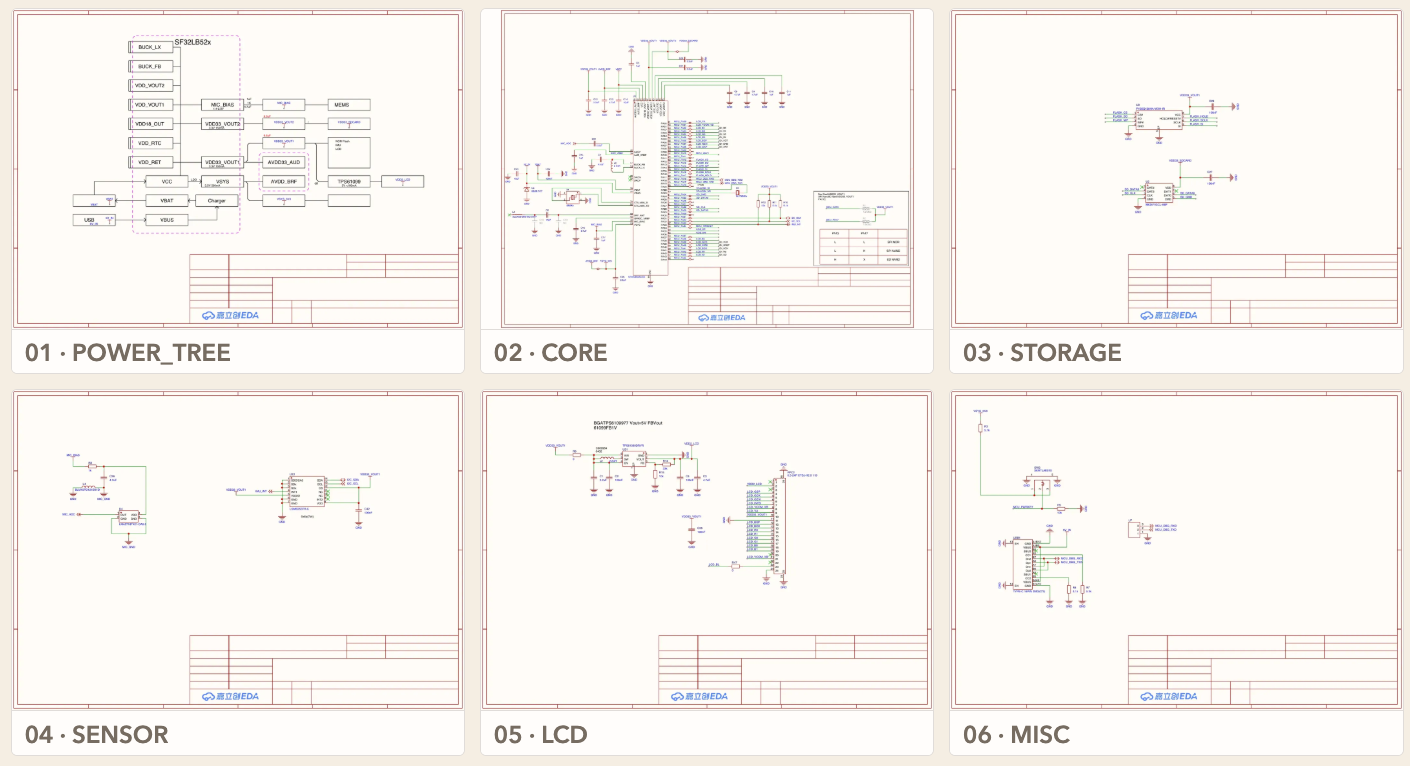
The published schematic runs to six sheets covering the power tree, the processor core, storage, the sensor block, the display and a miscellaneous sheet for connectors and debug. Reading it is the fastest way to check the claims above, because the unusually specific parts list only shows up when it has to.
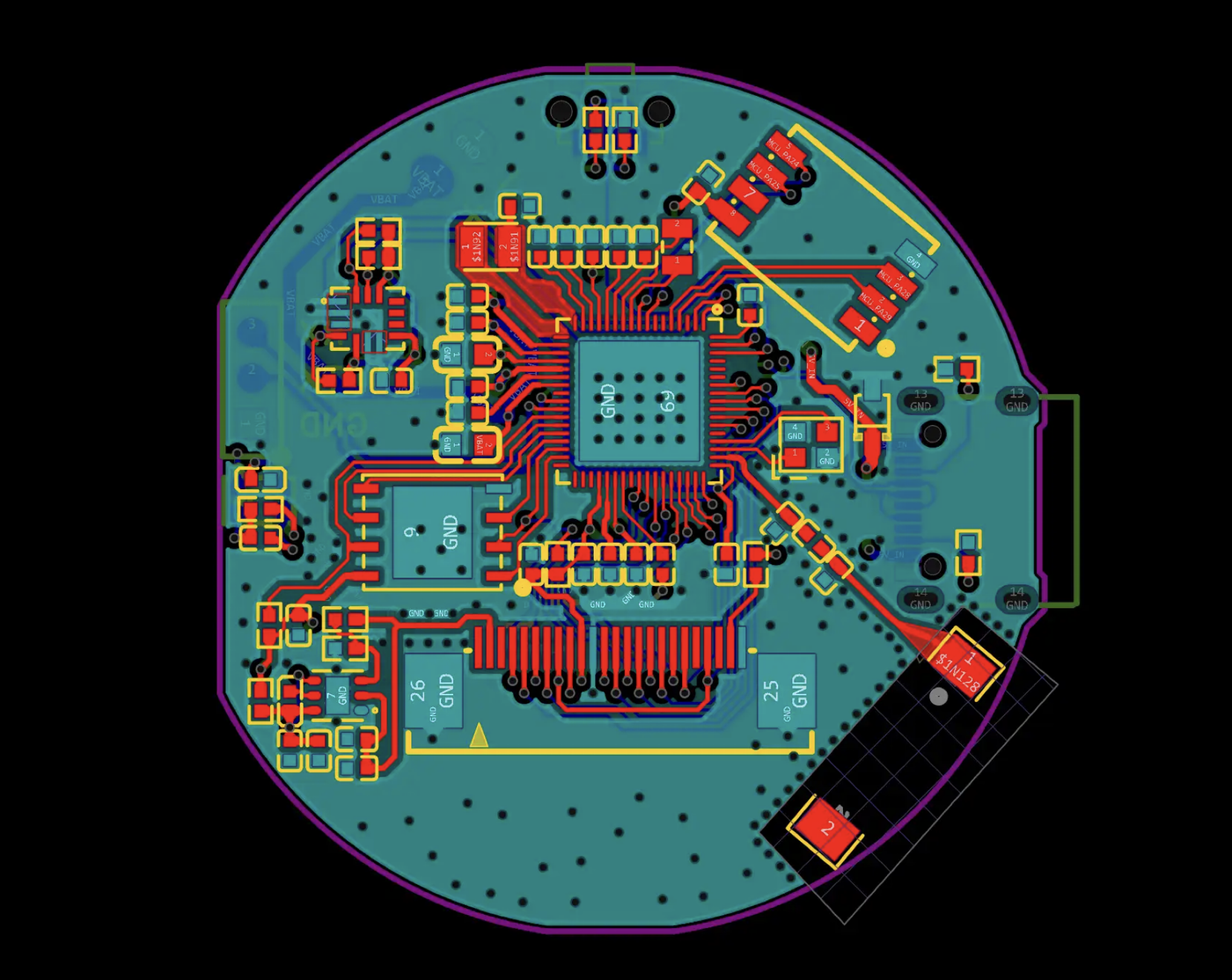
The board is round to fit the case, with the processor roughly at the centre, the USB-C connector breaking the outline at the lower right, and the storage, sensing and boost circuitry arranged around the edge. It is a single-board design: everything the product does is on this one outline, which is the real difference between this and a breadboard build.
A day of audio, and where it goes
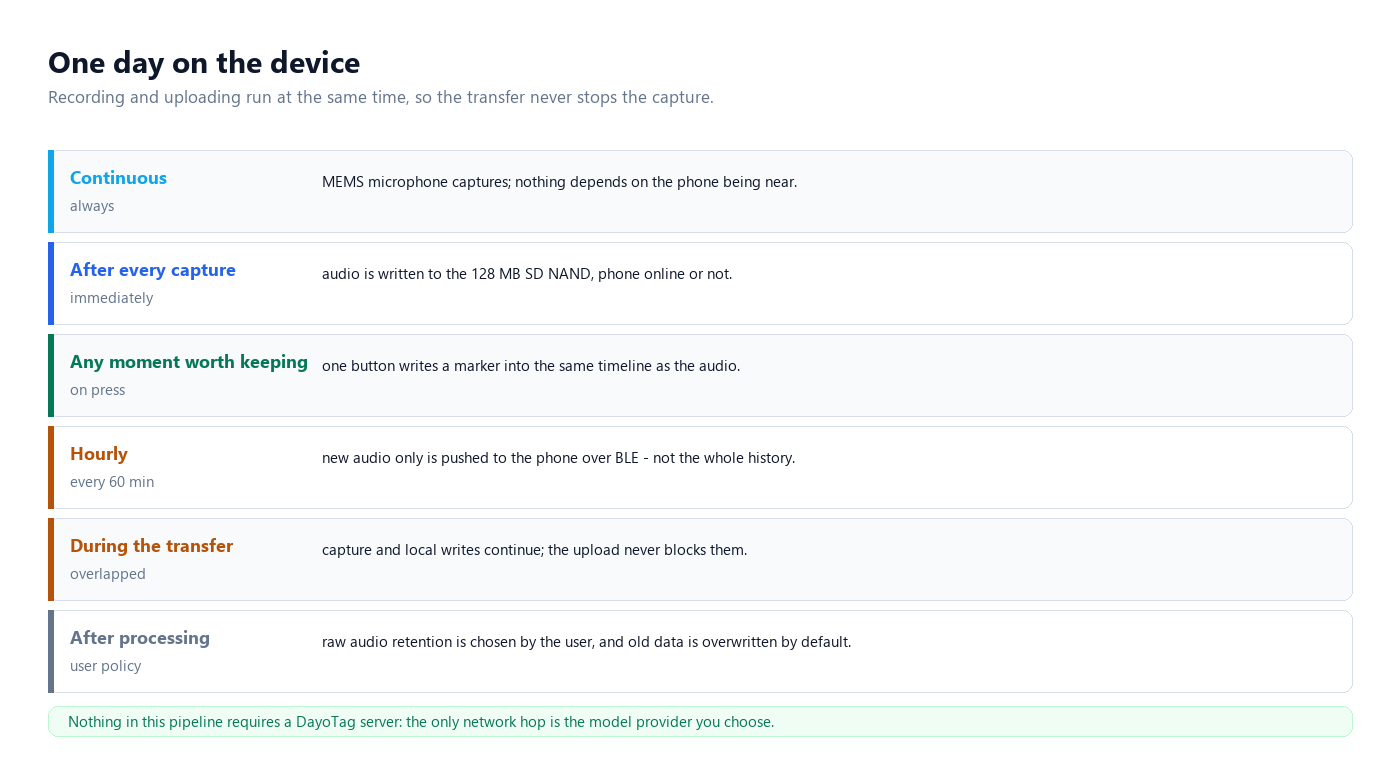
The capture pipeline is designed around one rule: recording must never depend on the phone. Audio is written to the local SD NAND immediately after capture, a button press writes a marker into the same timeline, and only at the hourly sync does anything leave the device. Uploading new audio and continuing to capture run at the same time, so a transfer does not create a gap in the day. Retention is a user setting rather than a fixed default, which matters when the storage is 128 MB and the device is running all day.
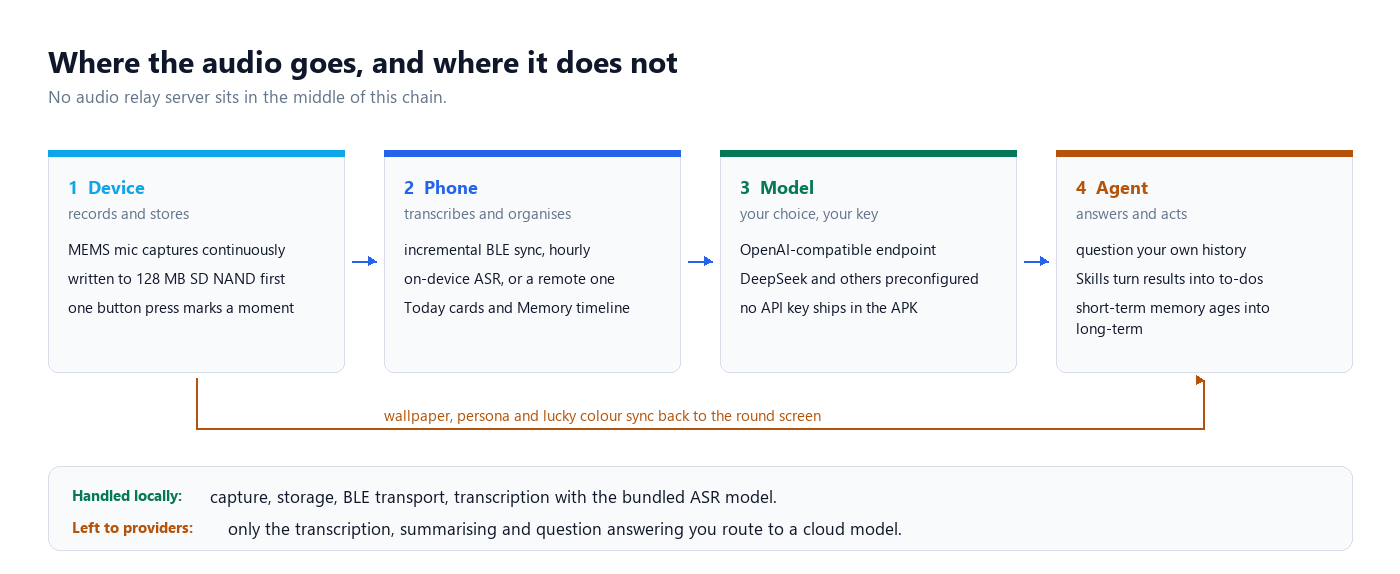
The important claim in the middle of that chain is architectural rather than technical: there is no relay server. Audio moves from the device to the owner's phone over Bluetooth, and transcription can run on the phone with the speech recognition model that is bundled inside the app. If you want better accuracy, you point the app at a remote speech service, and if you want the agent to answer questions, you point it at a model provider with your own API key. The app ships with presets for several providers and also accepts any OpenAI-compatible endpoint. No shared API key is included in the download.
Two boards, two firmware trains, one app
The product exists in two hardware revisions that share a name and nothing else that matters:
| V1 | V2 | |
|---|---|---|
| Screen | 1.2-inch round JDI reflective | square six-colour e-paper |
| Firmware line | 1.15.x | 2.15.x |
| Pairing | six-digit code on screen | button press to confirm, double press for the device number |
The firmware version number is literally prefixed with the board number, and the vendor states plainly that flashing the wrong board leaves both the display and the microphone non-functional. The app bundles both firmware images and picks the right one from the hardware version the device reports, so everyday updates over the air are safe; it is the manual flashing route that carries the risk.
The app itself is Android only, at version 7.0 and later, and the download is around 238 MB. That size is not an accident: the APK contains the on-device speech recognition model and the firmware images for both board revisions. An iOS build exists as a public TestFlight beta and is not on the App Store, and the user guide is candid that iOS background limits make connection and sync less reliable there than on Android. Firmware flashing over a wire is documented as verified on Windows only.
The printed shell
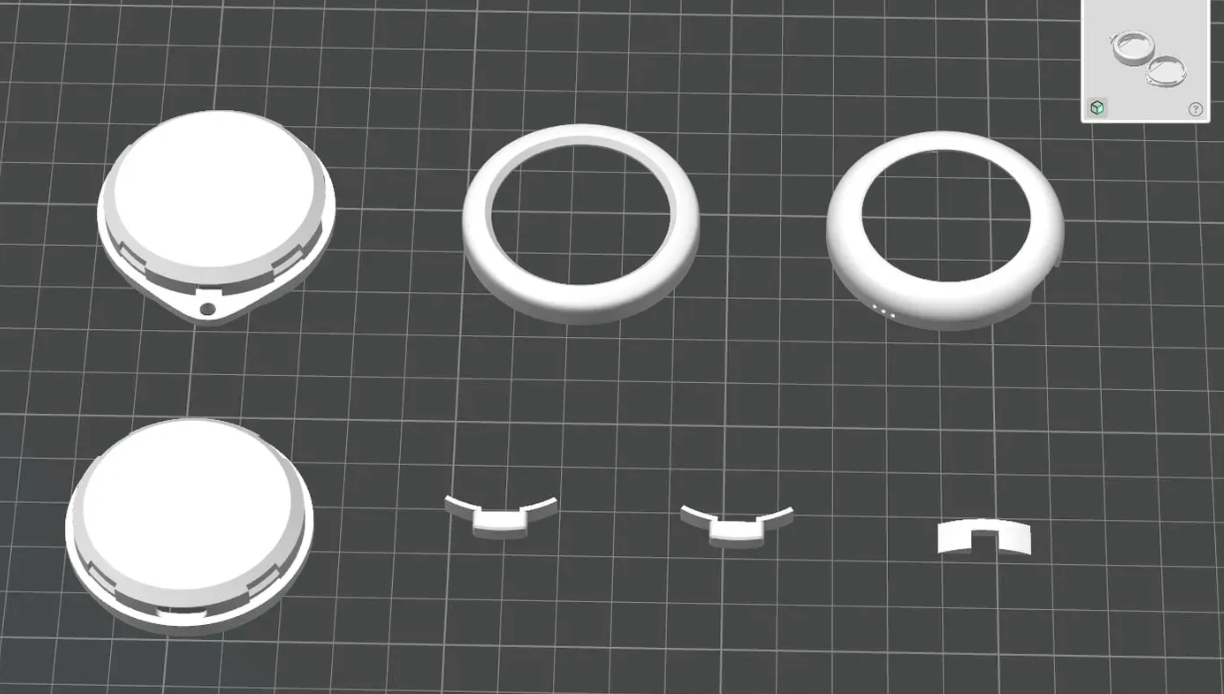
The mechanical side is published as a slicer file rather than a set of drawings, which is the pragmatic choice for a printed enclosure. The interesting part is what it admits about tolerances: the design ships two button variants and tells builders to print both and pick whichever fits their machine better. It also keeps two shells in parallel, one with a ring for a lanyard or keyring and one without for magnetic mounting, and the assembly order puts the USB-C connector in before the internal retainers.
Before you build one
- Treat the cost figure as a headline, not a budget. The platform states a replication cost of about 100 yuan, but the bill-of-materials tab for the project is currently empty, so there is no published line-item breakdown to check it against. A round board, a reflective panel, a MEMS microphone, an IMU and a custom shell will not always land where one number suggests.
- Do not expect to rebuild the software half. You can flash the official firmware and install the official app, and that is the intended path; reading or modifying them is what the licence forbids. If your interest is in the memory agent rather than the pendant, this project is not the one to fork.
- Expect the connector work to be manual. The back-side USB-C has to be hand-soldered on this revision, and the flashing route needs an external 3.3 V USB-to-UART adapter because the board has no USB-to-serial chip. A plain USB-C cable to a computer will not work, which is the single most common first-build surprise in wearable projects.
- Plan for the storage ceiling and the retention policy together. The device holds roughly 128 MB and overwrites old audio by default. That is fine for a design where the phone is expected back within the day, and wrong for anything that assumes the device is the archive.
- Check what the product does not do. Summaries of this project circulate with claims about keeping your dreams; nothing in the published product overview, user guide, firmware notes or hardware documentation describes a sleep or dream feature, so treat that as marketing rather than specification.
- Recording in public is a legal question, not a product feature. The project's own privacy notes state that the device's recording capability does not override local law or the reasonable expectation of the people around you.
IOTTourChina covers open-source IoT hardware and the silicon behind it as part of its developer resource. This is editorial coverage, not an endorsement or an advertisement; specifications, availability, licensing and pricing should be confirmed with the project before you buy or build.