Development Boards
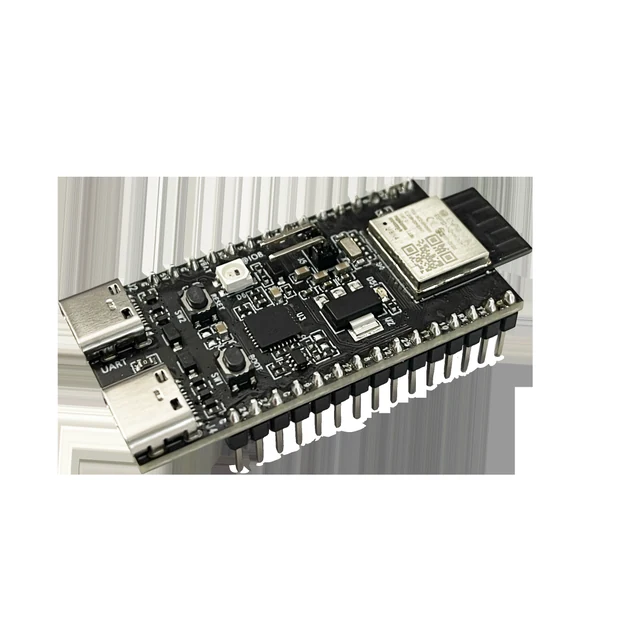
Espressif ESP32-H2-DevKitM-1
Entry-level ESP32-H2 board for Bluetooth LE and 802.15.4 only; it carries no Wi-Fi radio at all.
Capabilities below are vendor-documented. We have not tested this device or its integrations.
Sources checked:
Suitable projects
- Thread sleepy end devices and Zigbee sensors.
- A radio companion for a board that has no 802.15.4, such as the P4.
- Low-power nodes where Wi-Fi is deliberately absent.
Before you buy
- There is no Wi-Fi radio; anything that needs Wi-Fi needs a second board.
- The N4 part number is not recommended for new designs.
Official resources
- ESP32-H2 Series Datasheet, Version 1.3
- ESP32-H2-MINI-1 and 1U Datasheet, Version 1.6
- ESP32-H2 development board user guide, PDF edition
- ESP32-H2-DevKitM-1 Schematic v1.3
- ESP32-H2-DevKitM-1 PCB layout v1.2
- ESP32-H2-DevKitM-1 user guide
Related guides
- ESP32 chip comparison: C3, C6, H2, S2, S3, P4 and C5
- ESP32 hardware selection: from development board to module to antenna
- ESP32 production readiness: what changes after the prototype works
- ESP32 low-power reality: what the sleep current tables actually say
- ESP32 supply chain: what Espressif's own documents say, and where they stop
- Module
- ESP32-H2-MINI-1, or -1U for an external antenna
- Flash
- 4 MB, no PSRAM
- Wireless
- Bluetooth 5 LE, Bluetooth mesh, Thread, Matter and Zigbee
- No Wi-Fi
- The 2.4 GHz radio is BLE and 802.15.4 only
- Crystal
- 32.768 kHz low-power crystal on board
- USB ports
- Two Type-C ports
- Part numbers
- N4S with PCB antenna; N4 is marked NRND
Choosing Espressif ESP32-H2-DevKitM-1
This profile is based on official documentation, not our own device testing.
What it is
A small board around the ESP32-H2-MINI-1 module. The H2 is the 802.15.4-only member of the ESP32 family: Bluetooth 5 LE, Bluetooth mesh, Thread, Matter and Zigbee, with no Wi-Fi radio.
That single omission is the whole buying decision. If your device needs to join a Wi-Fi network, another board is required, either instead of this one or next to it.
Specifications
| Item | Value |
|---|---|
| Module | ESP32-H2-MINI-1, or -1U with an external antenna connector |
| Flash | 4 MB |
| PSRAM | None |
| Wireless | Bluetooth 5 LE, IEEE 802.15.4 |
| Protocols | Thread, Matter, Zigbee, Bluetooth mesh |
| Low-power clock | 32.768 kHz crystal on board |
| USB ports | Two Type-C, one native to the chip, one UART bridge |
| Part numbers | N4S with PCB antenna, N4 marked not recommended for new designs |
Why the crystal matters
The board carries an external 32.768 kHz crystal for the low-power clock. The vendor documents it as improving timing accuracy and lowering average power. For a sleepy end device that wakes on a schedule, that is the difference between a spec sheet number and a battery life you can plan around.
Check before ordering
- Confirm you do not need Wi-Fi. This board cannot provide it.
- Take the N4S part number. N4 is marked NRND in the user guide.
- Budget for a second board if the product needs both Wi-Fi and Thread, or design a two-chip carrier.
Next step
Decide whether the H2 is the main controller or a radio companion, then confirm the module antenna option and the Thread role your firmware will implement.